


Cilia are tiny, hair-like structures that extend from cells throughout the body, including the airways, kidneys, eyes, nose, and brain. Some beat to move mucus or fluid; others help cells sense and respond to their surroundings.
Disruptions in cilia function can affect brain development, vision, kidney function, and fertility, to name some. They contribute to conditions such as hydrocephalus, polycystic kidney disease, and retinal degeneration, and are also being studied for their role in epilepsy and autism.
In the brain, motile cilia help move cerebrospinal fluid along the surfaces of the brain’s fluid-filled cavities. Primary cilia on neurons and other cells support signaling involved in brain development and function.
My research:
My work focuses on LF5 kinase, the Chlamydomonas homolog of human CDKL5 kinase. In humans, changes in the CDKL5 gene cause CDKL5 deficiency disorder (CDD), a rare neurodevelopmental disorder characterized by early-onset epilepsy, respiratory disease and severe developmental and intellectual disabilities. CDKL5 also localizes to mammalian cilia, making its ciliary function an important question in understanding the disorder. I focus on question like what is the function of LF5 in cilia, what is its upstream regulator, how different regions of the protein contribute to its function, and how its activity affects its localization and transport within cilia.
How I study it:
My research integrates molecular genetics, protein biochemistry, and live-cell imaging to investigate the relationship between protein activity, subcellular/ciliary localization, and function.
I use CRISPR/Cas9-mediated genome editing and molecular cloning to generate mutant and fluorescently tagged strains. Using total internal reflection fluorescence (TIRF) microscopy, I examine protein localization and intraflagellar transport (IFT) dynamics. Quantitative fluorescence analysis, including Python-based image processing, allows me to assess protein distribution along cilia and compare localization patterns across different genetic backgrounds.
In parallel, I employ in vitro kinase assays and biochemical approaches to investigate LF5 phosphorylation and catalytic activity. Site-directed mutagenesis and protein domain analysis are used to identify specific residues and structural regions that contribute to LF5 activity, localization, and ciliary length regulation.


Research Project


'Research is what I am doing when I don't know what I am doing.'
-Wernher von Braun
TIRF in vivo imaging
(Watch my proteins move in real time!)
Intraflagella Transport (IFT)

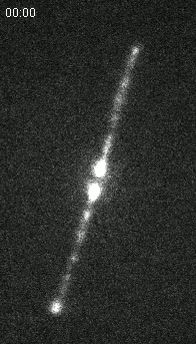
Wild Type LF5
Kinase Dead LF5

Publications
Activation of the ciliary kinase CDKL5 is mediated by the cyclin-dependent kinase CDK20/LF2 to control flagellar length
Yuqing Hou*, Oranti Ahmed Omi*, Michael W. Stuck, Xi Cheng, Bethany Walker, Ying-Wai Lam, Anna M. Schmoker, Son N. Nguyen, Maria Paz Gonzalez-Perez, Bryan A. Ballif, Karl F. Lechtreck , George B. Witman, Gregory J. Pazour
*Co-authors
PLOS Biology • 2025
Photosweep: An Engineering Approach to Develop Cost Effective Sterilization System for Hospitals
In book: Advances in Decision Sciences, Image Processing, Security and Computer Vision (pp.31-38) . 2020
CiliaTrace: Automated Ciliary Length Analysis by Graph-based tracing
Varshini Bonagiri, Pavan Kaushal Jabisetty, Oranti Ahmed Omi, Karl F. Lechtreck
International Symposium on Biomedical Imaging, ISBI 2027